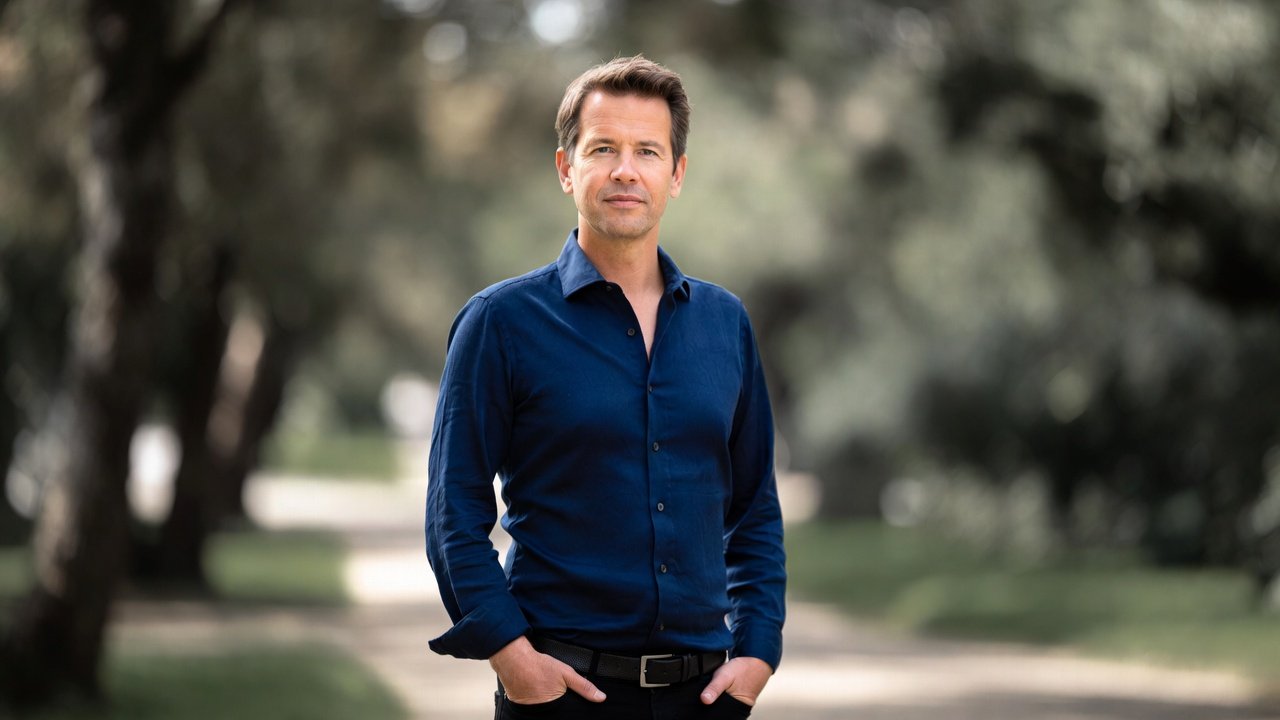
Jeroen Dik: The Dutch Artist Merging Classic Beauty with Modern Ideas
Introduction
Have you ever looked at a piece of art and felt like you were looking at two different worlds at the same time? That is exactly the feeling you get when you see the work of Jeroen Dik. He is a talented Dutch artist who has found a special way to bring the past and the present together on one canvas. In a world that often feels like it is moving too fast, his art invites us to slow down and think. He uses skills that artists learned hundreds of years ago but talks about ideas that matter to us right now, like technology and how we connect with each other.
Jeroen Dik is not just a painter; he is a storyteller. He believes that art should make you feel something. Whether it is a portrait that seems to look right through you or a landscape that feels strangely familiar, his goal is to start a conversation. People all over the world, from Amsterdam to New York, are starting to take notice. His work hangs in private collections and has been shown in galleries that celebrate fresh, new voices in the art scene. If you are tired of art that feels cold or hard to understand, Jeroen Dik offers something different. He offers a bridge. He connects the reliable, beautiful techniques of the old masters with the exciting, sometimes confusing, energy of modern life. Let’s take a deep dive into the life and work of this fascinating artist and see what makes his art so special .
Who is Jeroen Dik? The Man Behind the Canvas
To truly understand the art, you must first understand the artist. Jeroen Dik is a contemporary visual artist based in the Netherlands, but his reach extends far beyond the Dutch borders. He is a creative force who refuses to be put in a box. While many artists stick to one style or one medium, Jeroen Dik moves freely between painting, sculpture, and even digital works. This freedom is what makes his portfolio so exciting to explore. He was not born into a famous art family. Instead, his journey was built on a deep, personal love for creating things and asking big questions about the world .
He grew up surrounded by the rich cultural history of the Netherlands. Think of the famous Rijksmuseum in Amsterdam, filled with Rembrandts and Vermeers. That history is in his blood. But as he grew older, he also became fascinated with the sleek lines of modern design and the glow of a computer screen. This mix of old and new is the engine that drives his creativity. He is known as a thoughtful person who spends a lot of time in his studio, experimenting with colors and materials. He doesn’t just paint what he sees; he paints what he thinks and feels. This makes his work very personal. When you look at a piece by Jeroen Dik, you are getting a peek into his mind. He invites you to see the world through his eyes—a world where history is alive and the future is arriving fast .
The Early Years: Finding His Path in The Hague
Jeroen Dik was born in The Hague, a beautiful city in the Netherlands known for its international courts and stunning architecture. Growing up in such a vibrant environment gave him a head start. He was exposed to art, culture, and politics all at once. As a young boy, he was always drawing. He filled notebooks with sketches of people, buildings, and imaginary creatures. It was clear early on that he had a special talent, but more importantly, he had the drive to get better. He didn’t just want to draw for fun; he wanted to understand how art worked at its deepest level .
To build his skills, he pursued formal education. He attended the prestigious Royal Academy of Art (KABK) in The Hague. This is where he learned the “rules” of art. He spent hours learning to draw the human figure perfectly. He studied color theory and composition. But Jeroen Dik was smart enough to know that rules are meant to be understood first, and then broken later. He didn’t stop at the art academy. He also went to Utrecht University to study Art History. This was a game-changer for him. He learned why artists of the past made the choices they did. He studied the meanings behind the symbols in Renaissance paintings. By combining hands-on practice at the art academy with deep academic study at the university, he built a foundation that was stronger than most. This mix of practical skill and historical knowledge is the secret ingredient in his success today .
Learning from the Old Masters: Traditional Techniques
One of the most exciting things about Jeroen Dik is his respect for the past. He is like a musical artist who samples classic records to make a new hit song. He uses the same techniques that artists used 500 years ago. We are talking about methods like oil painting with many thin layers, called glazing. This is a slow process. You paint a layer, wait for it to dry for days, and then paint another layer on top. This creates a depth of color and light that you just can’t get from a fast painting style. He also studies chiaroscuro, which is the strong contrast between light and dark. This technique was perfected by masters like Caravaggio, and Jeroen Dik uses it to add drama and focus to his work .
Why does he stick to these old ways? Because they work. They create a physical beauty that feels real and lasting. When you stand in front of one of his paintings, you can see the texture. You can see the light glowing from within the layers of paint. This connects us to history. It reminds us that people have been trying to capture beauty for a very long time. Jeroen Dik acts as a bridge. He carries this ancient knowledge forward into our modern world. He proves that just because something is old doesn’t mean it’s boring. In fact, by using these techniques, his work stands out in a world full of quick digital images. It has a weight and a presence that feels solid and important .
Breaking the Mold: Adding Modern Ideas and Materials
If Jeroen Dik only painted like Rembrandt, he would be a copycat. But he is an innovator. He takes those old techniques and injects them with a huge dose of modern life. This is where the magic happens. He might paint a classic, beautiful portrait of a person, but then he will add elements that feel totally modern. Maybe the person is holding a smartphone, or their clothing has a futuristic, metallic sheen. He mixes the familiar with the strange. This creates a little shock for the viewer. It makes you stop and think, “What is going on here?” .
He also experiments with materials that the old masters never had. He might combine oil paint with resin, metal, or even digital projections. In some of his sculptures, he uses car parts or industrial materials. Think about that for a second. He is using pieces of a machine to create fine art. This reflects our modern world, which is a mix of nature, humanity, and machines. He is not afraid to get his hands dirty. He might use a brush one minute and a power tool the next. This willingness to experiment keeps his work fresh. It ensures that his art is not just a history lesson. It is a living, breathing conversation about what it means to be alive right now .
A Closer Look: Famous Works by Jeroen Dik
While Jeroen Dik has created many pieces, a few stand out and help us understand his vision. One of his most talked-about pieces is often referred to as “The Amalgamation.” In this work, you can see the clear influence of classical painting. The composition feels old and stable. But the colors are electric. He uses blues and oranges that almost seem to glow. It feels like a dream. It feels like a memory that has been distorted by time. This piece shows his skill in mixing the familiar with the surreal .
Another powerful series involves what he calls “Transcendence.” In these works, he uses digital projections on top of his painted canvases. Imagine walking into a gallery and seeing a beautiful, traditional painting on the wall. Then, slowly, lights and moving images start to project onto it. The painting comes alive. The flat surface suddenly has a video layer on top. This challenges our idea of what a painting is. Is it a static object, or can it move? Jeroen Dik plays with these questions. He doesn’t give us easy answers. He just gives us a beautiful puzzle to enjoy. His work invites us to look longer and think deeper, which is the sign of a truly great artist .
Why His Art Matters Today
In a time when we are all glued to our phones and bombarded with information, art by creators like Jeroen Dik matters more than ever. He gives us a reason to pause. His work is not just decoration; it is a form of meditation. He asks us to consider our relationship with technology. Are we controlling it, or is it controlling us? He asks us to think about history. Are we repeating the mistakes of the past, or are we learning from them? These are big, heavy questions, but he wraps them in beauty, so they are easier to digest .
Furthermore, he represents a growing trend in the art world. Collectors and fans are getting tired of art that feels shallow. They want substance. They want to know that the artist has skill and something to say. Jeroen Dik delivers on both fronts. His work has been featured in articles and discussions about the future of painting. He shows that painting is not dead. It is evolving. By bringing his deep knowledge of art history into the 21st century, he is helping to keep the entire medium alive and exciting for young people and experienced collectors alike .
Jeroen Dik and the World of Engineering: A Surprising Link
Here is a twist in the story that many people don’t know. There is another side to Jeroen Dik that is fascinating. Before focusing entirely on fine art, he was deeply involved in the world of automotive engineering. He ran a company called JDEngineering, where he became famous for tuning high-performance engines, specifically the 2.0 TSI platform. This is a world of data, horsepower, and precision mechanics. It seems like the complete opposite of the quiet art studio. But for Jeroen Dik, these two worlds are deeply connected .
Think about it. Both an artist and an engineer need a sharp eye for detail. Both need to understand how parts work together to create a whole. A painting needs the right balance of color, just like an engine needs the right balance of fuel and air. This background in engineering gives his art a unique flavor. He approaches his sculptures with the mindset of a builder. He understands materials on a physical, mechanical level. This duality makes him rare. He is a data-driven decision-maker in the studio and an empathetic creator in the workshop. He proves that you don’t have to be just one thing. You can love poetry and physics. You can love art and cars. This makes him a true Renaissance man for our times .
Public Recognition and Growing Influence
As more people discover his work, Jeroen Dik’s influence continues to grow. He is active on professional platforms like LinkedIn, where he connects with other artists, collectors, and digital marketers. He understands that in the modern world, an artist needs to be seen. He engages with his community, sharing updates on new projects and behind-the-scenes looks at his process. This direct connection with fans is building a loyal following. People don’t just buy his art; they buy into his story and his way of thinking .
His work has also been featured in niche publications. For example, his famous “MK1 G60” project, a car that blended vintage style with modern tuning, was featured in Performance VW Magazine. This brought his name to a whole new audience of car enthusiasts who might not normally visit an art gallery. He is slowly building a bridge between those two worlds. Whether he is working on a canvas or a car engine, his name is becoming synonymous with quality, innovation, and a relentless pursuit of perfection. He is a perfect example of how having multiple passions can actually make your main career stronger and more interesting .
What is Next for Jeroen Dik?
The future looks incredibly bright for this multi-talented creator. Jeroen Dik is always on the move, always planning the next big thing. He has talked about future projects that are even more ambitious. Imagine walking through a gallery and seeing a massive sculpture made from recycled car parts. That is the kind of thing he is exploring. He wants to create art that is not only beautiful but also talks about important issues like sustainability. He wants to take the waste from one industry and turn it into treasure for another .
He is also looking at new technology, specifically Augmented Reality (AR). He has ideas for interactive pieces where you can point your phone at a sculpture and see information about its design, or even see the engine parts moving inside it. This would be a way to merge his love for teaching with his love for creating. He wants to explain the “how” behind the beauty. By doing this, Jeroen Dik is ensuring that his work stays relevant for the next generation. He is not just resting on his past success. He is pushing forward, experimenting, and inviting us all to come along for the ride .
Conclusion
Jeroen Dik is more than just an artist; he is a visionary. He reminds us that the past is not something to forget, but a toolbox we can use to build the future. His work is a beautiful, thoughtful blend of old master skill and modern daring. Whether he is painting with layers of oil or sculpting with metal, he puts a piece of his soul into his work. He asks us to look closer, think deeper, and feel more. In a world that often feels divided, his art brings things together: the old and the new, the machine and the hand, the engineer and the poet.
If you are looking for art that has meaning, art that has history, and art that is looking straight into the future, you should keep an eye on Jeroen Dik. He is a name you will be hearing more and more often. We invite you to explore his work further. Look for his pieces online, read interviews with him, and let his unique vision inspire you to find the beauty in the connections between all things.
Frequently Asked Questions about Jeroen Dik
1. What kind of art does Jeroen Dik create?
Jeroen Dik creates contemporary art that blends traditional painting techniques with modern themes. He works with oil paints, sculptures, and even digital media. His art often explores the relationship between humanity, history, and technology. He is known for using classical methods like layering and glazing to create depth .
2. Where is Jeroen Dik from?
He is from the Netherlands. He was born in The Hague, a major city known for its art and politics. He studied at the Royal Academy of Art in The Hague and later at Utrecht University, which helped him develop his unique style .
3. Is Jeroen Dik involved in anything besides painting?
Yes, surprisingly, he is also an expert in automotive engineering. He ran a company called JDEngineering, where he specialized in tuning high-performance car engines. This background in mechanics and data often influences his approach to building sculptures and installations .
4. Why is Jeroen Dik considered unique in the art world?
He is unique because he successfully bridges two very different worlds. He has the deep, technical skill of a classical painter but the experimental mind of a modern innovator. He uses old techniques to talk about new ideas, making his work feel both timeless and completely fresh .
5. Has Jeroen Dik won any awards?
Yes, his artistic achievements have been recognized in the art community. Notably, he won the Young Artist Award at an International Art Fair. This award helped to cement his reputation as an up-and-coming talent to watch in the contemporary art scene .
6. How can I see Jeroen Dik’s artwork?
His work is often featured in art galleries and exhibitions. You can also find his portfolio and updates on his latest projects through professional networks like LinkedIn and various online art platforms. Following his work online is a great way to stay updated on upcoming shows